Project overview
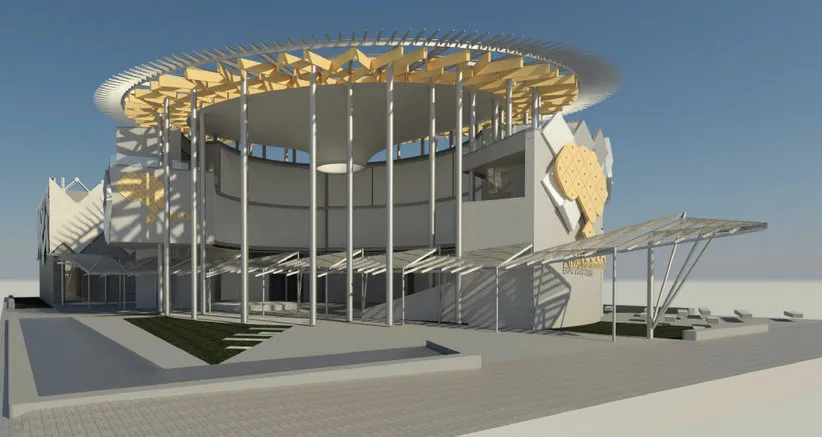
The Brazil Pavilion was Brazil’s national pavilion at Expo 2020 Dubai. Wrenze Steel designed the structural anchorage connections, with MJU Engineering Consultancy as the consultant.
Our scope
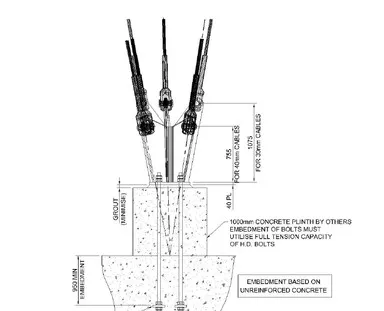
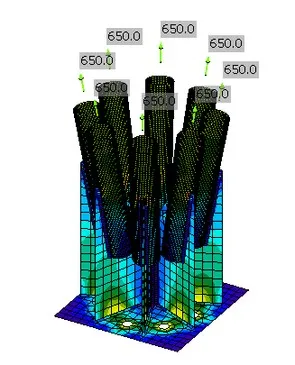
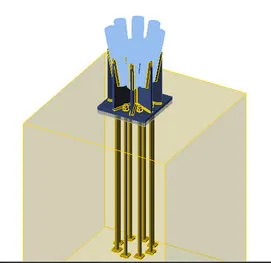
Our scope was the design of the anchorage connections: the points where the pavilion’s tension members and steel elements are fixed into the concrete below. Our models and drawings for the job show steel base plates carrying several cable fittings, anchored by long bolts into concrete plinths, with stress checks of the parts under load.
The structure
Anchorages are small parts of a structure that carry large forces. Where cables or tension members meet the ground, the anchorage has to take the full cable tension, often at an angle, and pass it safely into the concrete as tension, shear and bending.
The design covers each link in that load path:
- The fittings and plates: cable end fittings, the plate they connect to and its stiffeners, checked for bending and local stresses.
- The anchor bolts: sized for tension and shear, with enough embedment length to develop their strength.
- The concrete: checked for the cone of concrete that the bolts try to pull out, for edge distances and for the plinth itself.
Finite element models are useful here, because the stresses in a plate with several fittings at different angles are hard to judge by hand.
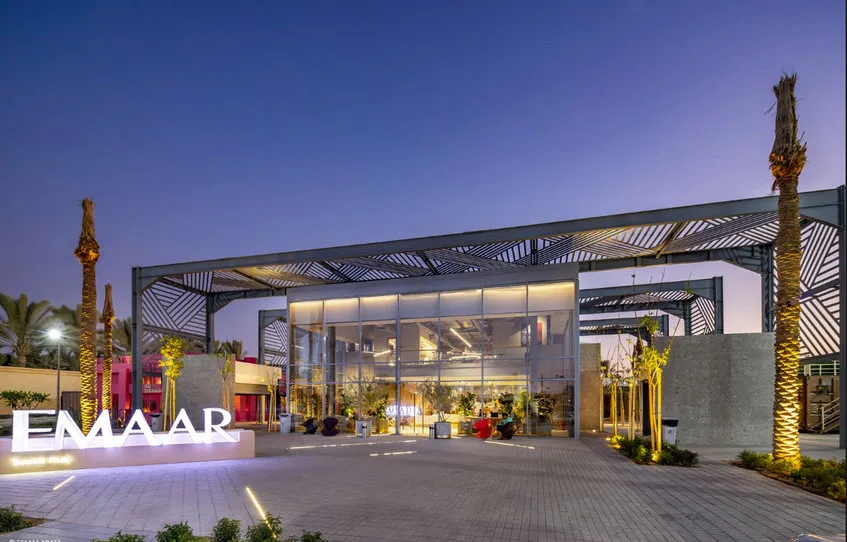
This was part of our wider Expo 2020 work. See our steel connection design service or request a quote.